
The Offspring of Skywoman and the Children of Eve
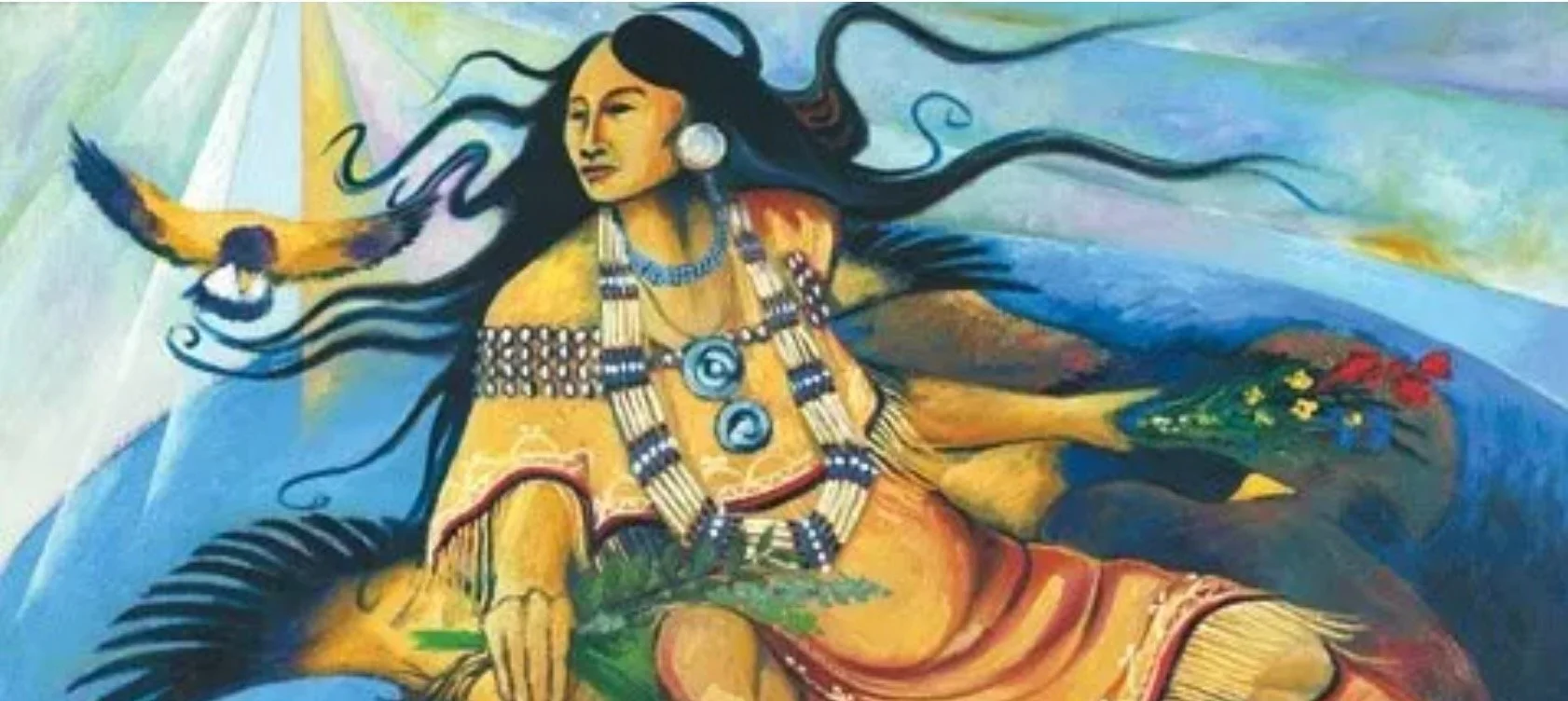
A guest sermon by Ben Rowswell at the Metropolitan Community Church Toronto, March 22, 2026
In Anishinaabe tradition, we begin an address not by introducing just ourselves, but by explaining our relations. Our relations to one another, to the land, and the responsibilities we bear to both.
So my name is Ben, and my relations are in the Rowswell family – some of whom came from as far as PEI to be with us today. Soon, I will be part of the Kassim family, since the beautiful woman in the third row accepted my marriage proposal last year.
The land to which I am most attached is a forest on the shores of Lake Weslemkoon in Eastern Ontario, as are all Rowswells.
And I relate to my community, and my country, as a human rights activist. 3 years ago I founded the Remembering Project, a group of non-Indigenous Canadians who acknowledge that our society caused intentional harm when we created and ran residential schools to eliminate the identity of other nations.
This work has led to receiving many gifts. When we have the courage to look directly into the shadows we see the object in its entirety more clearly. By looking into Canada’s shadows I’ve learned much more about this land than I ever knew.
Let’s start with one of the languages of this land. The Anishinaabe language just seems much better at describing the reality of living in Canada.
Today is the first week of spring. This means we are ending the month that can be translated as “the moon when ice forms a thick crust on the deep snow.” Now that sounds familiar, doesn’t it?
It’s also known as the “Hunger Moon” – because by now most of the food harvested last season and stored for the winter will have run out.
But that’s OK because we are entering the “Sugaring Moon.” For thousands of years, the nations of this land collected the sap that flows through trees all around and boiled it, then laid it out overnight in birchbark containers. Freezing would further remove water from the liquid and in the morning, below the ice, you would find a thick syrup. The first new calories to end the hunger of winter.
Now this practice didn’t belong to just one First Nation. They shared tips for surviving winter with each other. And so it was when the Europeans first came. The first ones were French. They brought wheat from Europe, and when the Indigenous gift of syrup met the European gift of crepes you got Canada’s most famous breakfast.
You see, there is something about this land that encourages to share. You don’t survive a Canadian winter all by yourself.
Here’s the thing: you can only learn things from other nations when you respect them. When you acknowledge their right to exist, to be themselves. There is a big difference between accepting individuals and accepting nations. For nations carry entire ways of living, a wisdom that exists between the many individuals.
The practices by which we learn to respect other nations are called inclusion. Inclusion is not just tolerating a different group. It requires being in an ongoing relationship with them. It requires accommodating different ways of thinking, of doing, of being.
Because they place central value on relationships, many First Nations have a particular skill at inclusion. Take gender identity. The Anishinabek believe that spirits have genders. So if you manifest two genders, you have two spirits inside you. If you direct experience of different spirits interacting, inside you, then you have insight into the spirit world.
In this way, transgender people weren’t simply tolerated. They were often looked up to as spiritual guides. Practicing inclusion meant you got to learn something from them.
When First Nations needed to make decisions, leaders of the various clans would meet in a council. Now because Canada is cold most months of the year, they would sit in a circle around a fire. In some nations, the word for government, or place for making decisions, is a Council Fire.
How many of you have ever sat around a campfire? So you would know that you spend most of your time sharing stories. You’re all in a circle, so no one has pride of place. You do far more listening than speaking. Under the stars above, you feel connected to something larger than yourself, and through that to one another. It’s natural place to take decisions that stick.
This emphasis on inclusion even applied in cases of criminal justice. No First Nations had jails – incarceration was unheard of until colonial times.
Always putting relationships first, they found ways to have perpetrators of crime face their victims, or their survivors. To avoid banishment, they had to find a way to atone for their crime and address the harm they had done. These First Nations practiced restorative justice.
Over time, these practices of inclusion had a profound impact on non-Indigenous people who came to settle Canada. When the British conquered the French, they passed the Quebec Act in 1791 protecting the French language and the Catholic religion. It was nothing like what the British Empire had ever done. Of course it wasn’t a British idea; it was the tradition of this land.
When the U.S. attacked Canada in 1812, the practices of inclusion between Indigenous and non-Indigenous Canadians helped us fight off the much bigger U.S. Our nations fought separately but together, each practicing our own kind of warfare, and that enabled us to prevail.
Of course, the truth is that within any nation, the instinct to dominate competes with wisdom of inclusion.
Over time, we let those instincts of domination prevail. We stopped respecting the nations with whom we shared the land. Our settlers pushed many of them farther west and north, until we became strangers to them, and them to us. We stopped learning from them.
By 1883, we decided there can be only one language, one society and way of living. That was the year the government joined churches in adopting a new form of schooling, one in which children would be sent as far away from their parents as possible.
To enforce this domination by one group over others, we sought to break the relationships that kept other nations alive. Generation after generation, we systematically separated parents and children so the latter would no longer remember, or no longer value, the teachings of their own nations.
Who suffered the most from residential schools? Children, of course. The historical record shows that 150,000 attended these institutions, and that conditions were so bad that Indigenous children died sometimes at 20 times the rate of non-Indigenous children. By last year, over 5000 students are confirmed to have died, and there are still more than 60,000 students that are unaccounted for.
This is the work our Remembering Project does – First Nations communities give us the names of missing children and we research archives to track down what happened to each and every one.
Consider it a form of restorative justice – when we acknowledge that our own society did harm, those we harmed are telling us how we can help.
We are seeing that will to dominate on the rise again. Across Canada, we are seeing a surge in denialism about residential schools. And of course, this growing trend toward dominance by majority groups is not limited to one vulnerable population.
In two provinces we have seen governments suspend Charter rights in order to override the rights of trans teenagers. In the U.S., a full-blown retreat on human rights is underway as immigrant children as young as five are arrested and citizens who stand up for them are shot dead.
In this new battle between inclusion and domination, we need champions of inclusion.
Just as the First Nations have practiced for centuries, we need to instill practices of inclusion between all the nations in our land if we are to avoid the fate of the United States.
In some ways it was this search that first brought me to MCC Toronto. I was invited by a straight young activist prominent in the movement for black equality that told me about the reputation you have for social justice.
When I arrived with my three children, a straight, cisgendered man myself, this community welcomed me.
Where does this instinct for inclusion come from? Christianity? Well, we all know that Christians can be either very inclusive or very exclusive. So it’s probably not that.
More likely, it is the lived personal experience of exclusion that so many gay, lesbian, trans and bi people have endured, in other churches and in society as a whole. It is the lived experience of the many LGBT refugees we have welcomed to Canada. You have an instinct for inclusion that is encoded in your very life experiences.
This is why I think this community has so much to offer a country that needs to relearn the practices of inclusion.
And where better to learn those practices than with the original nations of this land, who remain with us here in Toronto and all around.
From them, we can learn that inclusion means accepting not only individuals, but acknowledging the nations they belong to as well.
We can learn restorative justice, helping us as a society that caused harm to acknowledge that harm in front of those who suffered it.
We will know we have achieved inclusion when we are in a living relationship with these nations.
The same relationship that allowed us to learn, years ago, to boil the sap of the maple tree to satiate our hunger at the end of a long winter.
