
The Long-Term Costs of Short Cuts to Reconciliation
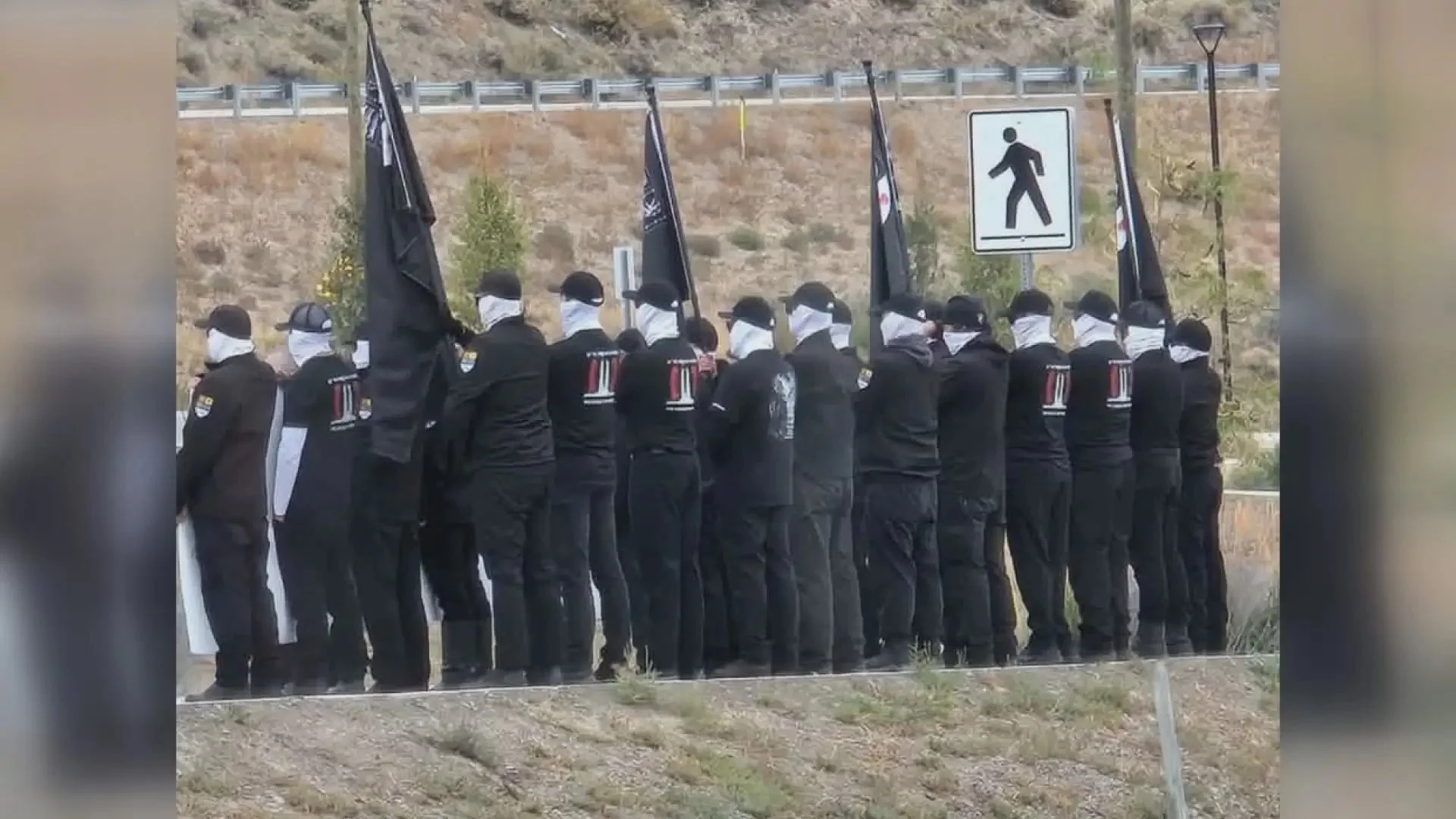
White nationalists march at T’Kemlups First Nation with signs reading “Got Bones?” September 27, 2026 (photo courtesy of Global News)
Kamloops is once again proving to be the place where Canada confronts its dark side.
Five years ago, it was where the bones of unidentified children prompted a search that forced a reckoning with the legacy of residential schools.
This week, it is where Canadians saw the far right on the march in our own country. The chilling scenes of men in paramilitary formation, hiding their faces as they intimidate marginalized communities into silence have come to our own country.
Why is it happening in the same place?
Canada is paying the price for having glossed over the “truth” component of our Truth and Reconciliation process. Unlike similar exercises in the many other countries that have turned to confront human rights abuses in their path, ours did not include accountability for those that committed the abuses. The Truth and Reconciliation Commission that the Harper government was forced to launch had a mandate to conduct research into the truth, but no mechanisms to force the churches and governments officials who ran these schools to confront the findings that emerged.
As a result, the flood of evidence that residential school system caused intentional harm to children, their communities and their nations is widely known - among those communities and those nations. Non-Indigenous Canadians can easily read the evidence - it’s all in the Final Report of the Commission and accessible to anyone that knows how Google works.
But it is painful for non-Indigenous Canadians to confront. And as a result they generally don’t.
The Remembering Project was designed to change that.
