
Heeding the Voice of the Falls
Reflections on the anniversary of our founding treaty
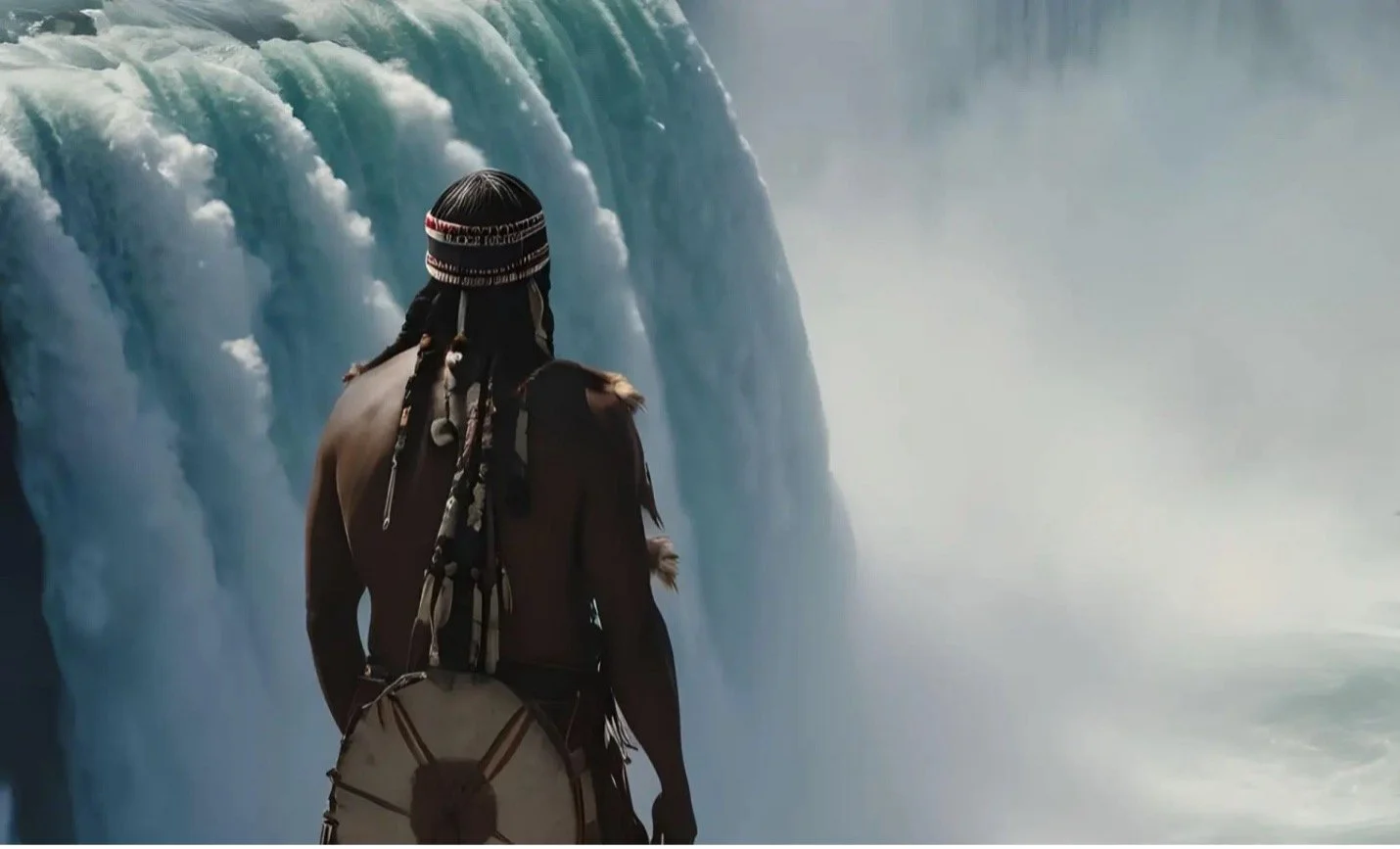
Picture courtesy of Niagaraaction.com
Grenville Mellen, an American poet who lived during the 19th century, found himself captivated by the great waters, and, in his famous poem entitled Niagara, marvelled that “their anthem voice [went] up amid the rainbow and the mist.”
As I pondered the beauty of the poet’s words, I wondered what Mellen thought the voice conveyed. In my view, deciphering this message requires a willingness to hear the voice of the falls, be patient, and embrace silence to understand.
And perhaps, it is in this silence that we as Canadians join not only Mellen but also the Indigenous peoples of the Niagara Region (e.g., the Haudenosaunee and the Anishinaabeg), who for millennia, have recognized not only the significance of the Falls as a force of nature with power and majesty, but also for what it can teach us.
The Falls remind us that we are the younger relatives of creation, with a lot to learn. Their sheer grandeur imbues them with a unique ability to transcend political and international boundaries. And it is in this larger perspective that this feat of nature forces us to take that we can find new possibilities.
Today, the Niagara River is the dividing point of the international border between the two nations. It would be wonderful if Niagara Falls was the only real divide between Canada and the U.S. At present, the relationship currently between the two countries is complicated, as evidenced by President Trump’s disregard for Canada, its economy, and its sovereignty, and his desire to selfishly profit off any stronger position his country holds over others – as demonstrated in the spat over revenues from the new Gordie Howe Bridge.
It was at Niagara that an earlier empire learned to wield its power differently.
Shortly after Britain’s victory over France in the Seven Years’ War, it faced the prospect of a new war with France’s allies through what we now call Ontario. The preferred method Britain had was to divide and conquer; it did this by working out separate deals with each First Nation so that it could leverage its greater power.
One imperial official guilty of this practice had, by war’s end, become Superintendent of Indian Affairs. Sir William Johnson had a reputation for favouring some chiefs over others. But as Canadians now demonstrate, the weaker parties to unfair agreements watch and learn. In 1763, when the U.K. tried to negotiate individual treaties with the First Nations of this new territory, they held firm.
The Wendat, Anishinabek and Haudenosaunee took up the initiative. In a remarkable display of unity, 24 First Nations came together through a year of careful diplomacy to negotiate a common position toward the United Kingdom.
Unified in a position of common strength, the chiefs of these 24 nations agreed to meet Johnson at Fort Niagara in the summer of 1764. According to the Canadian Encyclopedia, at the time, “the wampum belts and medals, as well as the accompanying presents, established a peace and alliance between all the parties at the council and the British Crown”.
And the treaty they signed there prevented further settlement except by nation-to-nation treaties. It forged a military alliance that would protect Canada through the U.S. Revolutionary War and the War of 1812. And it established the rule of law as the basis for all Indigenous/non-Indigenous relations to this day.
Niagara Falls still stands at our common border, just a few kilometers upstream from Fort Niagara, where the treaty reminding us of the power in coordinated action was signed. As we mark the 262nd anniversary of the signing of the treaty, let us heed valuable lessons for our nation today in the face of American coercion, threat, and economic attacks.
Sadly, the Canadian government today does not recognize the 1764 Treaty. Let us take this as a reminder that there is still more to do and heed the call of the Falls to join forces, just as the 24 nations did. And let us also take the time to befriend and make space for each other. When we do this, we counter our relative weakness and open the door to enduring peace with those more powerful than ourselves.
In turbulent times, may we never forget to be refreshed by the Falls and their powerful anthem voice, which continues to go up amid the rainbow and the mist (Mellen).
