
Lest We Forget Those Who Fought For Canada and Who Made It Worth Fighting For
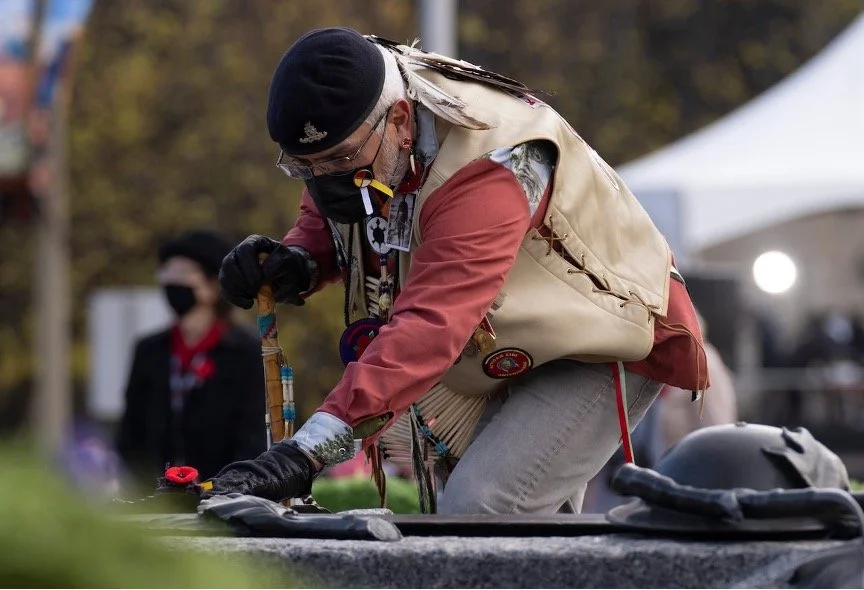
From CBC, Canada's Indigenous veterans faced tough battles — abroad and at home, November 8 2025
Albert Schweitzer said “Each of us has cause to think with deep gratitude of those who have lighted the flame within us.”
And he’s right. We do indeed owe a debt of gratitude to those who have inspired us. Who sparked joy on our darkest days and gave us hope in our most trying moments. And those who ignited within us the flames of curiosity, faith, hope and love.
This is especially true on Remembrance Day. Canadians across the country pause to solemnly honour and remember those who gave their lives for our freedoms during times of war, including the First and Second World Wars, the Korean war, the Vietnam war and the war in Afghanistan.
With their hands failing, our fallen heroes threw us the torch that we may always hold it high. And as a Canadians citizen and volunteer with the Remembering Project, I am especially grateful for the sacrifices and the bravery of the nearly 4,000 soldiers of Indigenous heritage who served with the Canadian Expeditionary Force (Canadian War Museum), and who are remembered and honoured on Indigenous Veterans Day.
Among them was Corporal Francis Pegahmagabow, a member of the Ojibway community and specifically the Parry Island Band, who for his valour and skill in sniping was awarded the Military Medal. He went on to found the predecessor of the Assembly of First Nations to advocate for the rights of Indigenous peoples; not only did he fight for Canada but he returned home to make it a better place.
We volunteers of the Remembering Project try to follow his example. A small but mighty group of Canadians who respectfully and thoughtfully support our country’s First Nations, Métis, and Inuit communities engaged in searches for residential school students who died while attending these institutions and who remain disappeared.
As a volunteer, I believe that remembering those who lost their lives extends beyond marking these solemn November commemorations. Our efforts in translating and transcribing historical documents (e.g., school journals, student registers), as well as our visits to the sites of various former residential schools and meetings with survivors are some of the ways “we acknowledge our collective responsibility for the residential schools set up in our name and take action to meet our collective responsibility.”
Through this work, we are rediscovering older ways to make this country better, deeper traditions captured in the treaties that created our country. In one of our discussions on the Robinson-Huron treaty of 1850, we learned of previous efforts to share the tremendous wealth of this land between the original stewards and non-Indigenous Canadians. The formula agreed at that time required the federal and provincial governments is still legally binding, and when our federal and provincial governments tried to avoid paying, the courts forced them to. That’s why $10 billion began flowing to Anishinaabe nations throughout northern Ontario in August 2024. It’s a fraction of what they would have received if Canada had kept our promises but it’s a step toward a better country for us all.
Learning that treaty from the mid-19th century remains the law of the land changed our understanding of what our country is capable of. In those moments, flickers of hope had arisen for Canada to live up to the promise of sharing this land equitably between all the nations that share it.
Friends, let us sustain these seeds of change. I am grateful and inspired to be part of the Remembering Project community. It is an encouraging reminder that Canadians do inspire each other, in various ways, to be bright lights wherever we are. May we begin by reflecting, “with deep gratitude of those who have lighted the flame within us.”
Kayona Karunakumar
